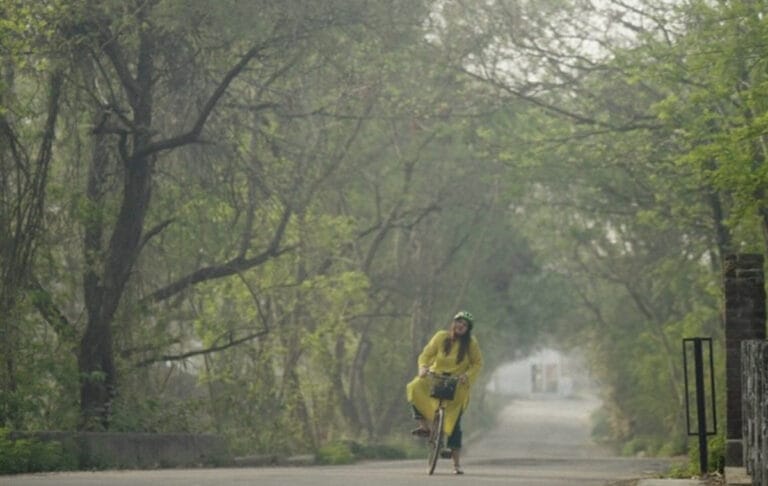
by Cristina Slattery for Winter Film Festival
See the romantic comedy Seems Like Love on February 20 @6:15PM at REGAL Union Square (850 Broadway) as part of New York City’s 14th Annual Winter Film Festival. Tickets now on sale!

SEEMS LIKE LOVE captures majestic St. Petersburg, Russia – its singular character that Inspires individuals to fall in love … both with the City itself and with each other.
Life can change in a day … especially when someone is open to new connections and experiences. Liza Orlova is a twenty-something who arrives in St. Petersburg from the small city of Pskov, close to the Estonian border. She emerges from the train station during the city’s breathtaking “White Nights” period, where the early summer days are almost endless. This determined young woman is on her own personal mission when she encounters a young man who is around her age – an artist – after falling victim to an apartment scam and having had her backpack with all of her personal documents stolen.
“St. Petersburg,” the setting of the 2025 Russian film, Seems Like Love, “is a very complex and very beautiful city,” Director Yana Klimova-Yusupova explains. “It has suffered, died, and been resurrected. It gave birth to great people and yet remained naïve, almost like a toy city.”
Vasiliy, the young artist, (whose name this character shares with the director’s grandfather, great-grandfather, uncle, and brother) first meets Orlova (whose name is connected to a count in the story of Princess Tarakonova, someone whose life in 18th-century St. Petersburg inspired the director) when she is sitting on an old bed with a brass frame in the middle of a sun-filled courtyard in the center of the city. This bed becomes an important fixture in the film and is reminiscent, in some ways, of the bed in The Nutcracker, the famous score of which was written by Russian composer, Tchaikovsky, who studied and lived in St. Petersburg. In that ballet, the bed transports pre-teen protagonist, Clara, into a magical world, while in “Seems Like Love,” the bed is pushed through the streets of St. Petersburg, provoking the consternation of authorities and some residents, too.
The music that accompanies Liza’s journey through St. Petersburg, as the city welcomes summer – and marathoners – is not classical though, but rather a series of Russian pop songs that many Russian viewers will likely be familiar with. Additionally, there are other similarities with the beloved ballet that is performed every Christmastime around the world; namely, the central theme of love. The question of whether Liza will find her prince, as she gets to know Vasiliy, and becomes acquainted with his friend, Victor, is part of the plot. However, although it seems (somehow) inevitable that a day filled with light, meetings with longtime residents, interactions with various locals on the streets of St. Petersburg, and attendance at a party filled with other artistic souls, might allow for romance to bloom, this sense of “fate,” in a sense, only heightens the moments of tension in the film.

The three main characters have various realizations about life and their goals and dreams throughout the film. Like the outsider she is, Liza snaps photos on a digital camera during the hours she spends with Vasiliy and Victor, and her impressions of the city become the viewers’ vantage points, too. The historic Russian city becomes a village in this film, and it’s clear that meeting the right people – a lucky occurrence for Liza – unlocks the city in a way that an individual just passing through would never have the opportunity to experience.
“Petersburg really does feel like a small village,” Klimova-Yusupova notes, “even though it’s a huge city.” The director continues, emphasizing that “there are many tourists, but there are also the city’s residents, whom you start to recognize in different places.”
Issues within families – alcoholism, pressure to settle for an older man who is a “provider,” and health concerns – are all mentioned in the film, and although these problems may affect people throughout the world, it seems implied that, in some ways, they plague Russian society to a greater degree. “I completely stepped away from the current [political] agenda” in the film, Klimova-Yusupova states. “Love has no form or time. And I want it to have no limitations.”
Therefore, even though the darker sides of life are included in “Seems Like Love,” hope (and light) seem to triumph; a wish that most people have for their lives (to find true love) is given the ideal setting in which to thrive, and the twists and turns that can occur even in the most condensed timeframe make the journey truly worthwhile. Finally, the skill of the actors and the comradery of their characters make this film a delicious escape.
About Winter Film Festival
Winter Film Festival is an all-volunteer women and minority-run organization as part of Winter Film Awards Inc, a 501(c)3 organization founded in 2011 to celebrate emerging talent in local and international filmmaking.
The 14th Annual Winter Film Festival runs February 18-22 2026 includes a diverse mixture of animated films, documentaries, comedies, romances, dramas, horror films, music videos and web series of all lengths. Our five-day event is jam-packed with screenings and Q&A sessions at NYC’s REGAL Union Square, six Education sessions/workshops and a variety of filmmaker networking events all coming to a glittering close on February 22 with our red-carpet gala Awards Ceremony.
Winter Film Festival programs are supported, in part, by public funds from the New York City Department of Cultural Affairs in partnership with the City Council and are made possible by the New York State Council on the Arts with the support of the Office of the Governor and the New York State Legislature. Promotional support provided by the NYC Mayor’s Office of Media & Entertainment.
For more information about Winter Film Festival, visit WinterFilmFest.org
email us at info@winterfilmawards.com and visit us at Instagram, Facebook and Twitter.